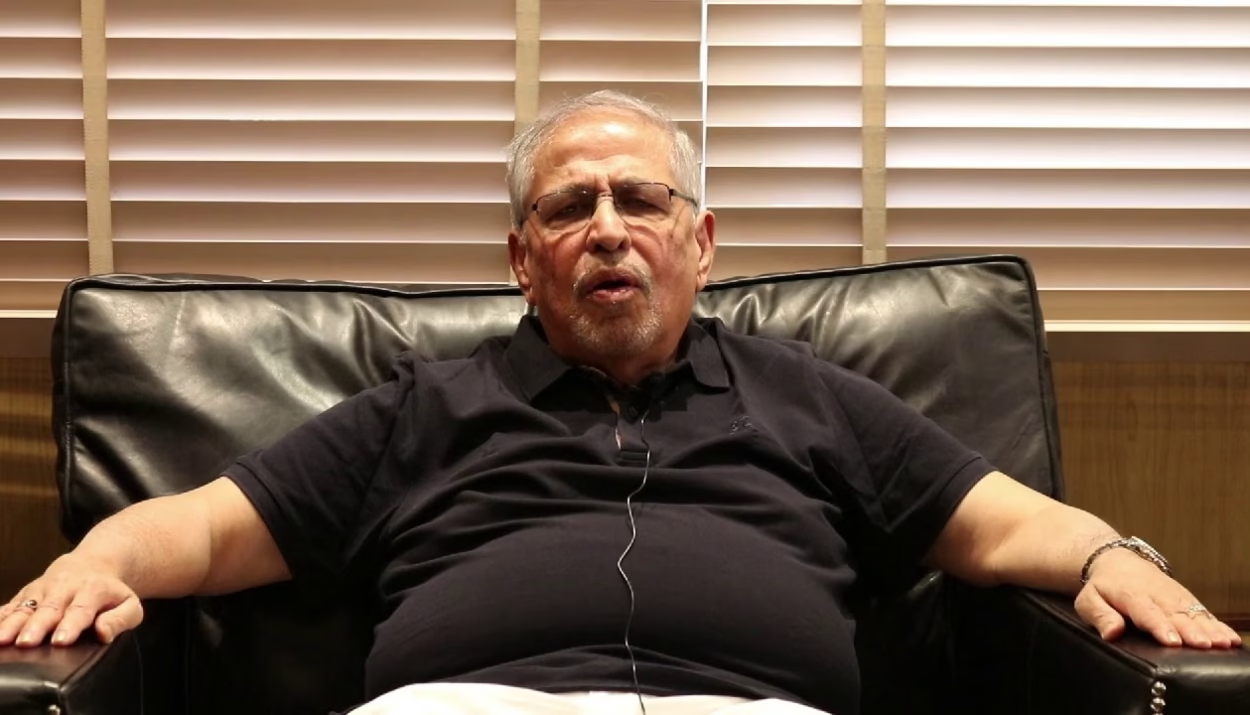

For decades, Mohamed Jaffer built one of Kenya’s most formidable—yet least visible—commercial empires in near-total silence. From grain silos to gas terminals, his influence has quietly shaped what ends up on Kenyan dinner tables and the energy used to prepare it.
Now, a controversial fuel import deal has pulled the Mombasa-based tycoon into an unfamiliar place: the public spotlight.
At the centre of the storm is a shipment of 60,000 tonnes of fuel imported outside Kenya’s government-to-government (G2G) framework by One Petroleum Ltd. The Directorate of Criminal Investigations (DCI) has summoned Jaffer, alongside other industry players, as part of a widening probe into the multimillion-shilling transaction that has already triggered high-level resignations.
Among those who have stepped aside are Energy Principal Secretary Mohamed Liban, Joe Sang of the Kenya Pipeline Company, and Daniel Kiptoo of the Energy and Petroleum Regulatory Authority.
The DCI has also called in other private sector figures, including Angeline Maangi and Paul Limo. But it is Jaffer’s summons that has drawn the most attention, reflecting his outsized role in Kenya’s strategic import infrastructure.
The “port man”
In business circles, Jaffer is often referred to simply as the “port man”—a nod to his long-standing dominance at the Port of Mombasa.
Through the MJ Group, which he chairs alongside his son Mujtaba, Jaffer has entrenched control over bulk grain and liquefied petroleum gas (LPG) handling. In recent years, his footprint has expanded into petroleum logistics, placing him at the heart of multiple supply chains critical to East Africa’s economies.
That dominance has historically come with little public scrutiny. Known for his intensely private style, Jaffer rarely speaks publicly and has avoided the limelight even as his businesses expanded across borders—from Kenya to Uganda, Rwanda, South Sudan and the Democratic Republic of Congo.
According to investigators, Jaffer has indicated he is unwell and may send a representative to respond to the DCI summons on behalf of One Petroleum.
The firm has maintained that it acted in response to an emergency request from the Energy ministry, and has pledged to withdraw the affected fuel after tests showed elevated levels of sulphur, benzene and manganese—above regulatory thresholds set by the Kenya Bureau of Standards.
From pallets to ports
Jaffer’s rise to the ranks of the billionaires is rooted in opportunism and timing. After a failed car dealership venture in the 1960s, he restarted in 1974 with a Sh20,000 loan, then pivoted to pallet manufacturing before moving into container logistics.
His breakthrough came with bulk grain handling. By shifting bagging operations from the quayside to inland silos, he reduced costs and waste—an efficiency play that would underpin decades of dominance.
By the early 2000s, his firm—then Grain Bulk Handlers Limited, later rebranded as Bulkstream—had secured exclusive rights from the Kenya Ports Authority to handle bulk grain imports at key berths in Mombasa.
The monopoly, initially granted to allow recovery of heavy capital investments, became increasingly contentious as import volumes surged. Its expiry in 2008 opened the sector to competition, triggering a long-running commercial and legal battle over control of grain logistics.
Rivalries intensify
The liberalisation of grain handling has drawn in new power players, notably interests linked to Mining Cabinet Secretary Hassan Joho.
A Sh5.9 billion contract awarded in 2022 to build a second grain-handling facility ignited a protracted court battle. While the Court of Appeal of Kenya initially reinstated the deal after the High Court quashed it, the Supreme Court of Kenya ultimately ruled that the procurement process failed to meet constitutional standards of fairness and transparency.
At the same time, Jaffer’s grip on the LPG market is facing perhaps its most credible challenge yet. Tanzanian tycoon Rostam Aziz is developing a rival Sh16 billion gas terminal at Dongo Kundu through Taifa Gas, setting the stage for a high-stakes contest over the region’s energy infrastructure.
Crisis as opportunity
If there is a consistent thread in Jaffer’s career, it is his ability to capitalise on moments of disruption. From grain shortages to shifting trade patterns, his businesses have often expanded during periods of uncertainty.
The current fuel import saga reflects a similar dynamic. Documents seen by investigators show that the decision to import fuel outside the G2G framework was discussed at a March 18 meeting involving senior officials and major oil marketers, including the National Oil Corporation of Kenya and the Kenya Revenue Authority.
Former Energy PS Liban reportedly defended the move as necessary to avert supply disruptions linked to geopolitical tensions in the Gulf.
Officials questioned so far have denied wrongdoing, arguing that the imports were sanctioned at higher levels to prevent a looming fuel shortage.
A rare moment in the open
For Jaffer, however, the investigation represents something more unusual: visibility.
After decades of operating behind the scenes, the tycoon now finds himself at the centre of a national conversation about energy security, regulatory oversight and the concentration of power in critical supply chains.
Whether the probe results in legal consequences or fades as a policy misstep, it has already achieved one thing—it has brought one of Kenya’s most elusive businessmen into the public eye, exposing the scale and reach of an empire built quietly at the country’s busiest port.